
Overview
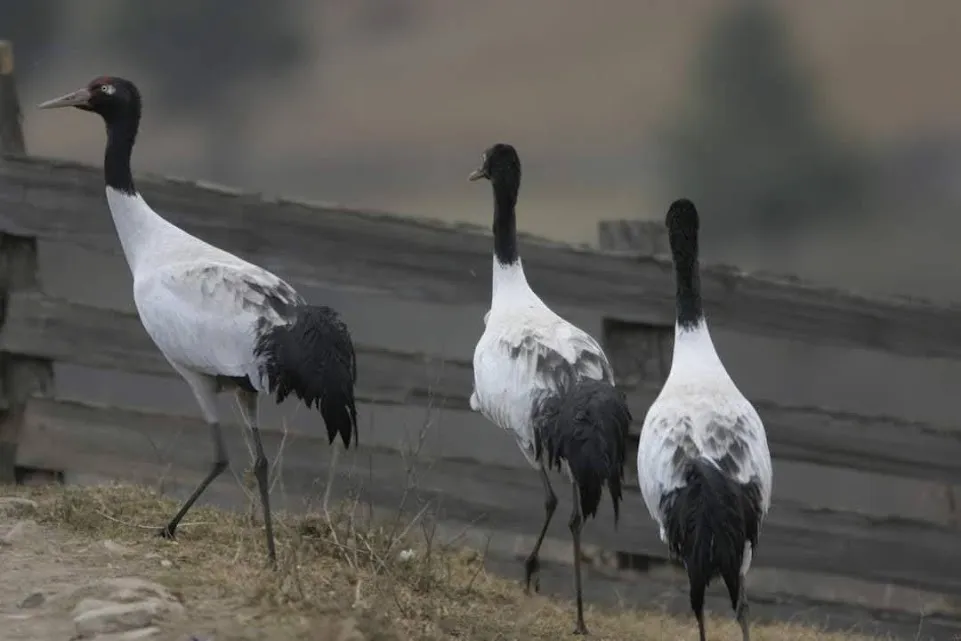
The Black-Necked Crane Festival is a village celebration in the Phobjikha valley, held every year on 11 November. Children perform crane dances and the community welcomes the birds back for the winter. This tour gives you two nights in Phobjikha so you can see both the festival and the cranes feeding on the valley floor.
November is one of the best months in Bhutan: dry, clear and quieter than October. Read more about black-necked cranes in Bhutan.
How the trip is paced
You start with two nights in Thimphu and one in Punakha, then climb to Phobjikha at about 2,860 m for two nights. The return through Punakha breaks the long drive back to Paro, and the Tiger's Nest hike comes at the end when you are well acclimatized.
Who this tour is for
Birdwatchers, photographers and anyone who wants a quieter festival than the big tshechus. Village festivals like this one are small and friendly, with more local families than tour groups.
- The Black-Necked Crane Festival at Gangtey Goenpa
- Dawn crane watching on the Gangtey nature trail
- Punakha Dzong and Dochula Pass
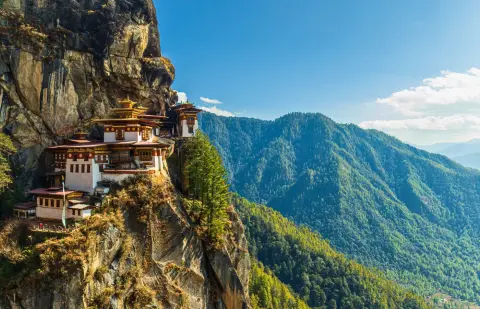
- Tiger's Nest at the end of the trip
Route and altitude
Schematic, not to scale. Open the interactive map for terrain and roads. Map data © OpenStreetMap contributors.
Show altitude data as a table
| Stage | Place | Sleeping altitude | High point |
|---|---|---|---|
| Arrive | Paro | 2,406 m / 7,894 ft | — |
| Day 1 | Thimphu | 2,310 m / 7,579 ft | — |
| Day 2 | Thimphu | 2,310 m / 7,579 ft | — |
| Day 3 | Punakha | 1,236 m / 4,055 ft | Dochula Pass 3,100 m |
| Day 4 | Phobjikha | 2,860 m / 9,383 ft | — |
| Day 5 | Phobjikha | 2,860 m / 9,383 ft | — |
| Day 6 | Punakha | 1,236 m / 4,055 ft | — |
| Day 7 | Paro | 2,406 m / 7,894 ft | — |
| Day 8 | Paro | 2,406 m / 7,894 ft | — |
Town altitudes are the national weather service (NCHM) station heights for each valley. Hotels may be a little higher or lower.
Day-by-day itinerary
Drive times are typical and include no stops. Mountain roads are slower after rain.
-
Day 1: Arrive in Paro, drive to Thimphu
- Overnight: Thimphu
- Sleep at 2,310 m / 7,579 ft
- Drive 55 km, 1 to 1.5 hours
- Meals: B, L, D
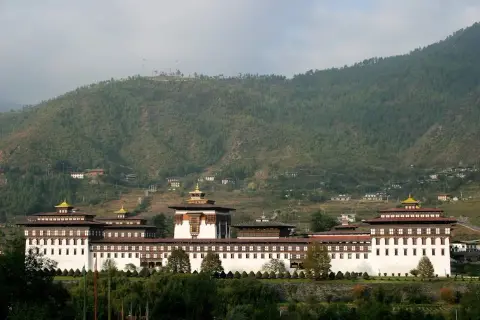
Your guide meets you at Paro airport for the drive to Thimphu, about 1 to 1.5 hours, with a stop at the Tachog Lhakhang iron bridge. In the evening, visit Tashichho Dzong after office hours.
Places: Tashichho Dzong
-
Day 2: Thimphu
- Overnight: Thimphu
- Sleep at 2,310 m / 7,579 ft
- Meals: B, L, D
See the Memorial Chorten, Buddha Dordenma and the takin, Bhutan's national animal, at the Motithang preserve. Afternoon at the National Textile Museum or the crafts shops.
Places: National Memorial Chorten, Buddha Dordenma, Motithang Takin Preserve
-
Day 3: Over Dochula to Punakha
- Overnight: Punakha
- Sleep at 1,236 m / 4,055 ft
- Drive 71 km, 2.5 to 3 hours plus stops
- Meals: B, L, D
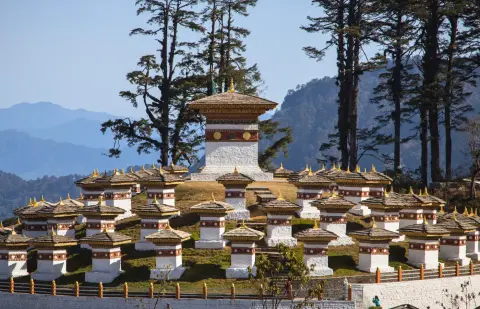
November is one of the clearest months at Dochula Pass (3,100 m), with a good chance of Himalayan views behind the 108 chortens. Descend to the mild Punakha valley and spend the afternoon at Punakha Dzong, where the two rivers meet.
Places: Dochula Pass, Punakha Dzong
-
Day 4: Punakha to Phobjikha
- Overnight: Phobjikha
- Sleep at 2,860 m / 9,383 ft
- Drive 78 km, 3 to 4 hours
- Meals: B, L, D
Morning walk to Chimi Lhakhang, then the climb to Phobjikha. Visit the Black-Necked Crane Information Centre, whose viewing scopes look out over the marshes where the cranes feed.
Places: Chimi Lhakhang, Phobjikha Valley
-
Day 5: Black-Necked Crane Festival
- Overnight: Phobjikha
- Sleep at 2,860 m / 9,383 ft
- Meals: B, L, D
Crane watching at dawn, then the festival in the courtyard of Gangtey Goenpa, with crane dances by local schoolchildren and masked dances. This day is fixed to 11 November.
-
Day 6: Gangtey nature trail, back to Punakha
- Overnight: Punakha
- Sleep at 1,236 m / 4,055 ft
- Drive 78 km, 3 to 4 hours
- Meals: B, L, D
A last early walk across the valley floor, then down to the warm Punakha valley. In the late afternoon, climb through terraces to Khamsum Yulley Namgyal Chorten for the view up the Mo Chhu.
Places: Gangtey Nature Trail (Phobjikha), Khamsum Yulley Namgyal Chorten
-
Day 7: Punakha to Paro
- Overnight: Paro
- Sleep at 2,406 m / 7,894 ft
- Drive 126 km, about 4 hours
- Meals: B, L, D
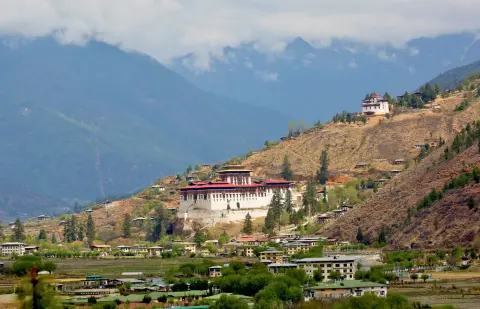
Drive west over Dochula Pass to Paro, about 4 hours. In the late afternoon, walk across the Nyamai Zam bridge to Rinpung Dzong and look out over the harvested rice fields.
Places: Rinpung Dzong
-
Day 8: Hike to Tiger's Nest
- Overnight: Paro
- Sleep at 2,406 m / 7,894 ft
- Meals: B, L, D
The Tiger's Nest hike, about 8 km and 5 to 6 hours round trip, with tea at the halfway cafeteria. November's clear air gives some of the best views of the monastery. Visit Kyichu Lhakhang on the way back.
Places: Tiger's Nest Monastery (Paro Taktsang), Kyichu Lhakhang
-
Day 9: Depart Paro
- Meals: B
If time allows before your flight, visit the National Museum in the old watchtower above Rinpung Dzong. Your guide takes you to Paro International Airport.
Price and what is included
| Group size | 3-star | 4-star |
|---|---|---|
| 1 traveler | US$2,200 | US$3,320 |
| 2 travelers | US$1,520 | US$2,160 |
| 3–4 travelers | US$1,320 | US$1,920 |
| 5–8 travelers | US$1,160 | US$1,760 |
Seasons: Peak season is March–May and September–November.
Single room supplement: 3-star US$360, 4-star US$960 for the whole trip.
Prices are per person for a private trip, valid to the end of 2027, and confirmed when you book. Festival weeks fill early.
Government fees, shown separately
- SDF, international adult
- US$100 × 8 nights = US$800
- SDF, Indian national
- ₹1,200 × 8 nights = ₹9,600
- Visa fee (Indians exempt)
- US$40, paid once
The international SDF stays at US$100 per night until December 31, 2029. Children under 6 pay no SDF; children from 6 until their 12th birthday pay half. How the SDF works · Calculate for your group
Included
- Licensed English-speaking Bhutanese guide for the whole trip
- Private vehicle and driver, including airport transfers
- Hotel accommodation (twin share) in your chosen category
- All meals in Bhutan
- Entrance fees to monuments on the itinerary
- Visa processing
- Bottled water in the vehicle
Not included
- Sustainable Development Fee (shown as a separate line in your quote)
- Visa fee (shown separately; Indian nationals do not need a visa)
- Flights to and from Paro
- Travel insurance (recommended, not mandatory)
- Drinks, tips and personal spending
When to go
This tour runs all year. Green months have the most reliable weather.
| Trek | Jan | Feb | Mar | Apr | May | Jun | Jul | Aug | Sep | Oct | Nov | Dec |
|---|---|---|---|---|---|---|---|---|---|---|---|---|
| Black-Necked Crane Festival Tour | January: Not verified | February: Not verified | March: Not verified | April: Not verified | May: Not verified | June: Not verified | July: Not verified | August: Not verified | September: Not verified | October: Not verified | November: Best | December: Not verified |
See month-by-month weather: March · April · October · November.
Fitness, altitude and packing
Is this tour right for you?
The longest walk is the Tiger's Nest hike on day 8: about 8 km round trip and 5 to 6 hours, climbing from about 2,600 m at the car park to the monastery at about 3,120 m. It is steep but not technical, and ponies can carry you up to the halfway cafeteria. Every other day involves short walks around dzongs, temples and villages.
You spend two nights in Phobjikha at about 2,860 m, where November nights are below freezing. Walks on the Gangtey nature trail are easy and mostly flat.
What to pack
- Layers: a fleece or light down jacket for mornings and evenings
- Long trousers or skirt and a top with sleeves for dzongs and temples
- Comfortable walking shoes with good grip for Tiger's Nest
- Rain jacket (essential May to September)
- Sun hat, sunglasses and sunscreen
- Refillable water bottle and a small daypack
- Any personal medicines
- A warm down jacket, hat and gloves for Phobjikha
- Binoculars for crane watching
Places you visit
Frequently asked questions
Are the cranes guaranteed to be there?
Not guaranteed, but very likely. The cranes usually arrive in late October and stay until February or March, so by 11 November most years they are already in the valley.
Is the festival date fixed?
Yes. Unlike lunar festivals, the Black-Necked Crane Festival is held on 11 November every year at Gangtey Goenpa.
Is this a group tour?
No. Every tour is private: your own guide, car and driver, and only the people you travel with. Dates are flexible and we can change the pace, hotels or places to suit you.
Is the Sustainable Development Fee included in the price?
No. The SDF is a government fee charged per night and is always shown as a separate line, so you can see exactly what it adds. Read how the SDF works or use the cost calculator.
Before you book
Similar tours
 10 days
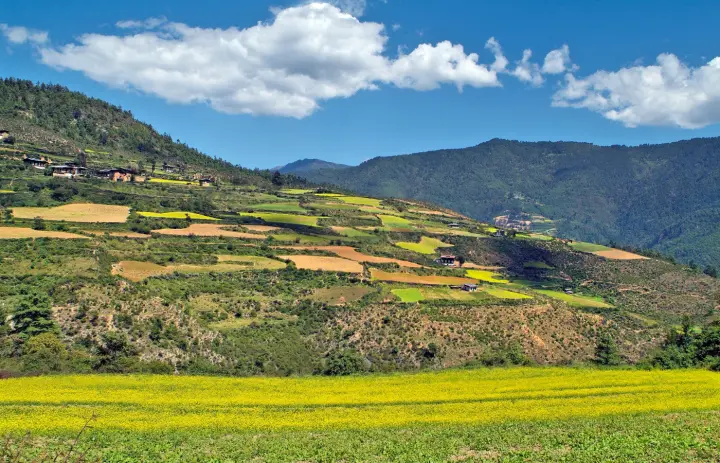
10-Day Bhutan Tour with Phobjikha and Bumthang
Western Bhutan plus the central valleys: Phobjikha, Trongsa and Bumthang, Bhutan's spiritual heartland.
 7 days
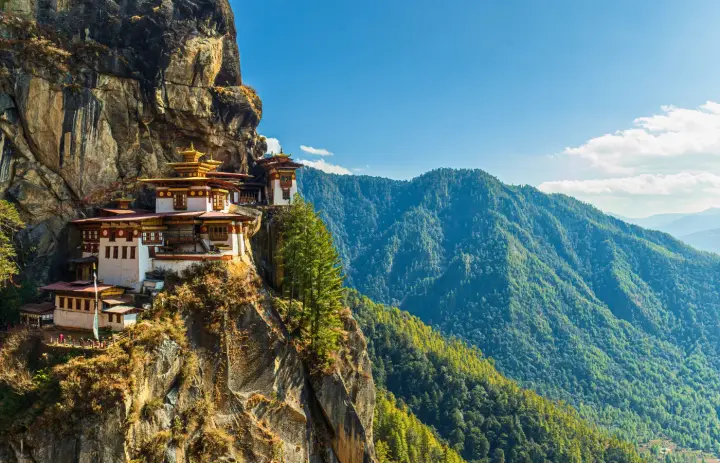
7-Day Bhutan Cultural Tour
A week in western Bhutan at an easy pace: Thimphu, Punakha, the Haa valley over Chele La, and two nights in Paro for Tiger's Nest.
 6 days
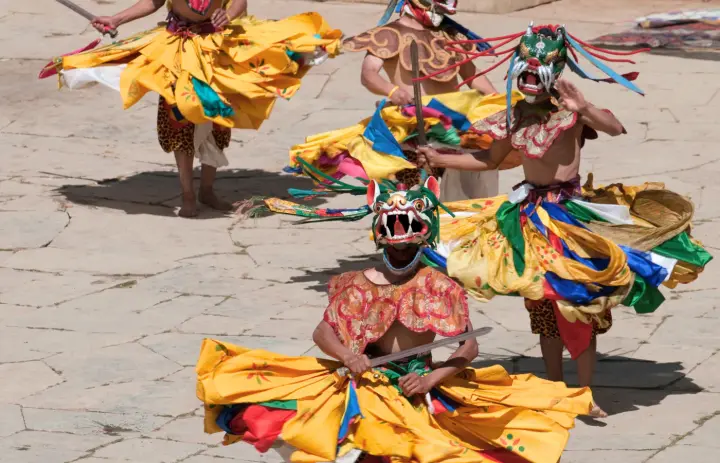
Paro Tshechu Festival Tour
Six days timed around the Paro Tshechu: two festival days in Rinpung Dzong, the giant thongdrel shown at dawn, and the classic western Bhutan sights.