
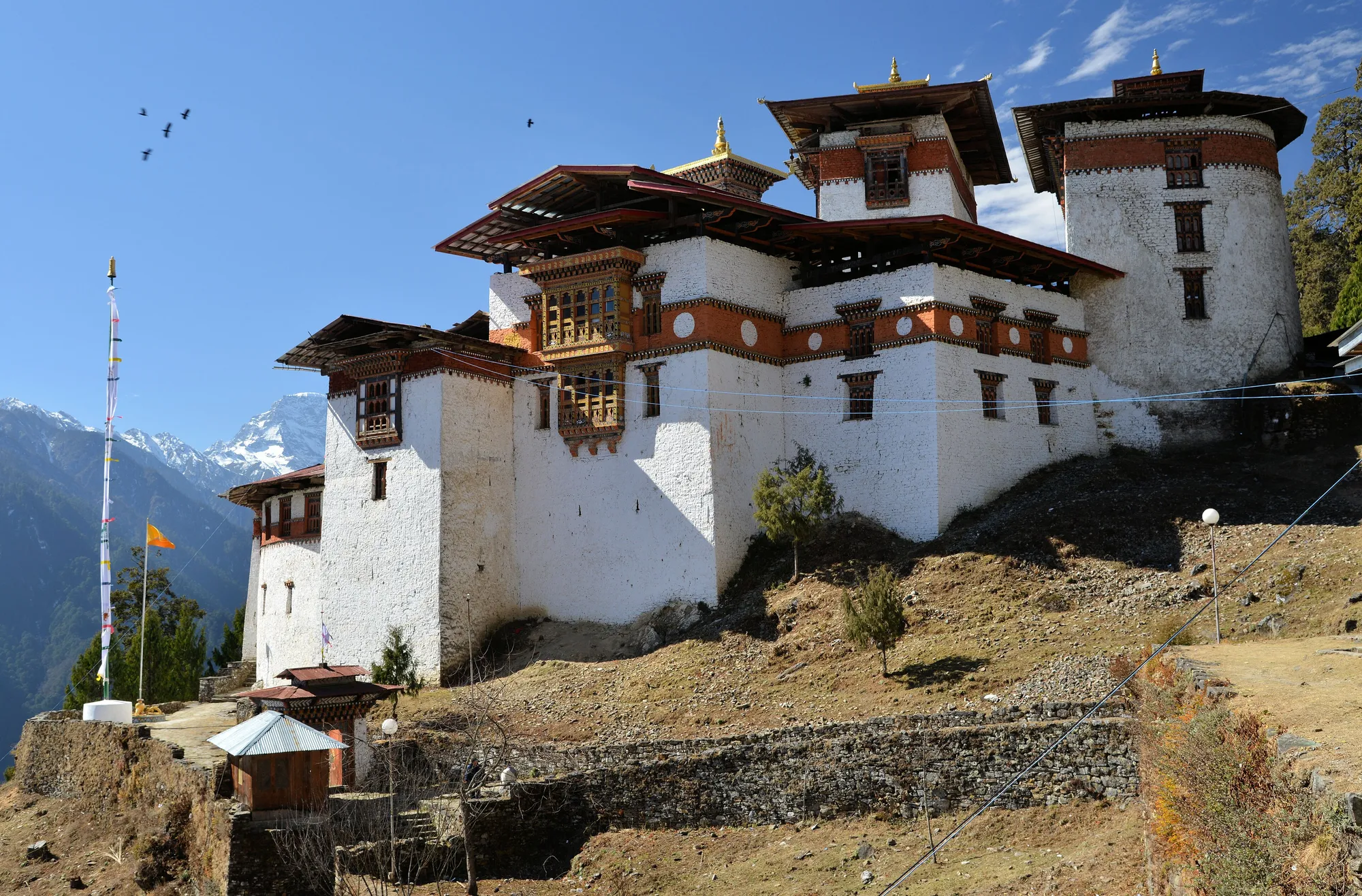

About Gasa
Gasa is a district (dzongkhag) in northern Bhutan. Its administrative center is Gasa (Gasa Tashi Thongmoen Dzong). It covers about 3,118 km² and had 3,952 people in the 2017 census.
Bhutan's least populated and least densely populated district. All of it is protected area, mostly Jigme Dorji National Park, and the north-east is part of Wangchuck Centennial Park.
Gasa Tshachu: 10 pools (8 public in separate men's and women's sheds, plus 2 VIP), room for about 180 bathers, open round the clock.
What to see in Gasa
- Gasa Dzong (17th century; badly damaged by fire in Jan 2008)
- Gasa Tshachu hot springs (about 2,100 m, on the Mo Chhu; rebuilt and reopened 14 Oct 2023)
- Laya village (Layap people, about 3,820 m)
- Jigme Dorji National Park (covers most of the district)
- Tshechu Drak (sacred longevity cliff, Panikong)
- Lunana and the Snowman Trek
Festivals
- Gasa Tshechu, Gasa Dzong (2026 dates, tentative: 26-28 Mar)
- Royal Highland Festival (Laya)
- Laya Run
See the festival calendar for the latest dates.
Getting there
By road north from Punakha up the Mo Chhu valley. Expect a narrow, mostly unpaved road that reaches the dzong and is being extended to Laya.
A licensed guide must accompany tourists throughout Bhutan. Ask us to add Gasa to your route.
Places to visit in Gasa
dzong
Gasa Dzong (Tashi Thongmoen Dzong)
A 17th-century fortress (named 1648) built against attacks from the north, on a 13th-century meditation site of Drubthob Terkungpa. A 10-hour fire badly damaged it in January 2008. It is the administrative centre of Gasa.
hot-spring
Gasa Tshachu (hot springs)
A popular hot spring on the bank of the Mo Chhu below Gasa Dzong, believed to cure many ailments. After repeated flood damage, a rebuilt complex with 10 pools for about 180 bathers reopened on 14 October 2023.
Festivals in Gasa
- Royal Highland Festival (Laya)23–24 October 2027 · tentative
Last verified November 27, 2026 · source